link0 link1 link2 link3 link4 link5 link6 link7 link8 link9 link10 link11 link12 link13 link14 link15 link16 link17 link18 link19 link20 link21 link22 link23 link24 link25 link26 link27 link28 link29 link30 link31 link32 link33 link34 link35 link36 link37 link38 link39 link40 link41 link42 link43 link44 link45 link46 link47 link48 link49 link50 link51 link52 link53 link54 link55 link56 link57 link58 link59 link60 link61 link62 link63 link64 link65 link66 link67 link68 link69 link70 link71 link72 link73 link74 link75 link76 link77 link78 link79 link80 link81 link82 link83 link84 link85 link86 link87 link88 link89 link90 link91 link92 link93 link94 link95 link96 link97 link98 link99 link100 link101 link102 link103
Oceangoing Cargo Ships Safety & Operational Matters
Home || Tanker Safety || Container Ship Handling || Commercial Management || EMS

Efficient cooking methods - catering for galley staff

Cooks on all seagoing vessels should give a considerable thought while choosing appropriate cooking methods for all the prepared meals for ship staff. He should understand well the similarities and differences of the various cooking methods.

Chief cook being in charge of preparing meals from a list of ingredients, he should always try to use all available resources and appropriate cooking method for each item. This will enable him to produce tasty and nutritious meals while also ensuring that food stock is used economically. For example, using expensive items for roasting or stewing should be avoided, since for such meals, less tender and cheaper products should be used. In the following paragraphs, the main advantages and disadvantages of the various cooking methods are explained.

containerships operational matters
Oil Tanker Safety Guide
different-cooking-method-ship-staff


cooking-preparation-ship-staff


Different Cooking Methods

Cooking methods are dividing into three categories:
  1. Dry-heat :Dry-heat cooking methods are quick and add crispness and flavor to food but do not tenderize. Tender, thin or small portions are appropriate for this method of cooking. This method uses hot air or fat to cook food. Methods include: sautéing, pan-frying, deep-frying, grilling, roasting and baking

  2. Moist-heat : Moist-heat cooking uses liquid such as water, stock, or steam to cook food. Most seafood, vegetables, tender cuts of poultry, such as chicken breasts and some fruits, rice, and pasta, are ideal for moist-heat cooking methods. It’s better to choose less expensive cuts of meat, poultry, or seafood because moist-heat cooking can break down tough cuts of meat due to the long and slow cooking process.Methods include:poaching, simmering, boiling and steaming

  3. Combination heat: Combination cooking methods are suitable for severe or less expensive cuts of meat, such as; beef round or pork shoulder, some vegetables and certain firm-fleshed seafood like swordfish, tuna or monkfish. Methods include: braising and stewing
comparing different-cooking-method-ship-staff


Comparing Different Cooking Methods

Sautéing : There should be just a thin coating of fat in the pan (about 1/8th inch). Sautéing uses conduction to transfer the heat from the hot pan to the food.

Pan-frying : The food should be partially submerged in fat. The fat should cover approximately 1/3 to ½ of the product, which is to be cooked. The heat is transferred through both conduction and convection: the conduction of the hot pan to the food, and also through the convection of the fat which partially surrounds the food.

Deep-frying : To deep-fry, the food is entirely submerged in hot fat. Heat is transferred to the menu in deep-frying through conduction of the hot fat which surrounds the food.

Grilling & Broiling :Though these terms are often used interchangeably, they are distinctly different. While both use a radiant heat transfer, the heat source from grilling comes from the bottom, or underneath the food. Whereas, the heat source from broiling is on top, or above the menu.

Roasting and Baking : Roasting and baking are the same things; the difference is the terminology. Generally speaking, meats, poultry, and vegetables are roasted.

Baking is generally applied to breads, pastries and other sweet confections. Over and under-heat is transferred to the surface of the food through the convection of the hot air, and then penetrates the food through conduction.

cooking-&-holding-temperatures
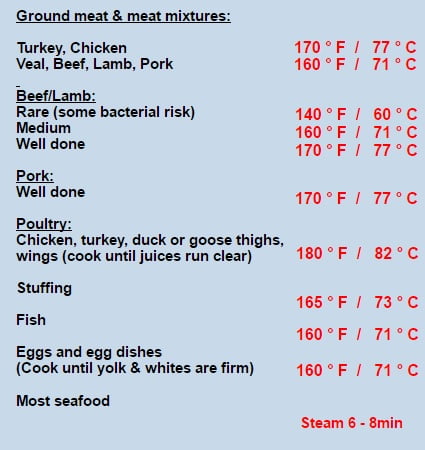
Fig: Cooking & holding temperatures

Poaching, Boiling, Simmering & Steaming :These four cooking methods are similar in that they are all moist-heat cooking methods and they all use convection as the mode of heat transfer.


The table right shows the cooking temperature for different types of food.


Related guideline

  1. Efficient cooking guideline for chief cook - five things to remember


  2. Different cooking method for ship use


  3. Catering for a multicultural crew


  4. Catering for galley staff - garbage management


  5. Environmental aspects - various safety matters


  6. Action to be taken if drugs are found onboard


Other info pages !

Ships Charterparties Related terms & guideline
Stevedores injury How to prevent injury onboard
Environmental issues How to prevent marine pollution
Cargo & Ballast Handling Safety Guideline
Reefer cargo handling Troubleshoot and countermeasures
DG cargo handling Procedures & Guidelines
Safety in engine room Standard procedures
Questions from user and feedback Read our knowledgebase
Home page


ShipsBusiness.com is merely an informational site about various aspects of ships operation,maintenance procedure, prevention of pollution and many safety guideline. The procedures explained here are only indicative, not exhaustive in nature and one must always be guided by practices of good seamanship.

Site Use and Privacy - Read our privacy policy and site use information.
//Home //Terms and conditions of use

Copyright © shipsbusiness.com All rights reserved.